


It can be challenging to pin down the factors guiding Donald Trump one month after the US and Israel's campaign of military action on Iran.
However, it remains clear he has an eye on the oil markets.
A comment – or tweet – from the American leader concerning his plans used to trigger significant swings in oil prices, as traders reacted to indications the conflict could worsen or de-escalate.
However, in the last week, investors appear to be growing more doubtful about the value of his pronouncements.
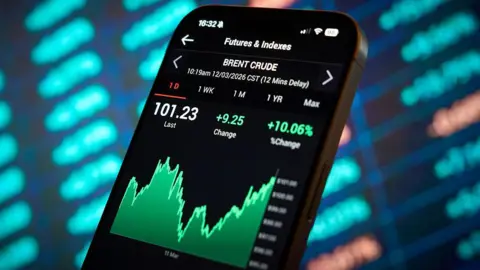
Oil was valued at approximately $72 a barrel (bbl) before 28 February, when the military action against Iran began.
Last week, it climbed to $118 a barrel on 19 March and as of Friday afternoon was sitting at around $112 – significantly higher than its pre-conflict price.
The following are some moments from the recent weeks where Trump and the financial markets appear to have influenced one another – with mixed results.
Navigate with the arrow to move to the next slide.
"Oil prices have come to represent broader political and financial uncertainties, spiking when Trump's tone grows aggressive and falling back when his comments becomes more conciliatory," observes one financial expert.
He continues that financial markets are rightfully sensitive to those cues, given the big financial dangers that come with rising oil prices.
"Traders are trying to price authentic volatility," he comments. "The markets can appear skittish or uncertain, but what they're actually attempting is navigating geopolitical risk in the moment, with oil acting as the heart of that."
But, it can be difficult for investors to decide how to position themselves, given that some of Trump's remarks appear intended to affecting oil prices, rather than conveying official strategy, notes another financial strategist.
"As the saying goes, the first casualty of war is truth," he remarks. "It is likely some of the rhetoric back-and-forth around successful negotiations, and the contrary, very much are focused on merely shifting the market price of oil."
Investor Response Become Increasingly Muted
On a recent Thursday, moments after US equity markets recorded their sharpest fall since the start of the Iran war, Trump said discussions with Iran were going "very well" and he was delaying military strikes on Iran's energy infrastructure until at least 6 April.
However, the price of crude proceeded to climb.
One market analyst explains that market reactions are "showing less volatility" because of the "significant disconnect" between Trump's reassurances and the lack of confirmation from Tehran.
"Given the optics, a large number of market watchers cannot envision an quick end to the hostilities and markets remain anxious."
Another investment director notes markets have also grown used to Trump "repeatedly changing tack at hints of geopolitical, stock market or market turmoil".
"There is a level of wariness, or even downright distrust, creeping in at the margins," he concludes.


